Shiro Beta (Luis Rodriguez)
Shiro Beta (Luis Rodriguez) is a Mexican digital artist and designer, whose practice explores digital identity, mysticism, and biology through 3D artifacts, CGI, and generative AI. Trained in product design at ECAL (École cantonale d'art de Lausanne, Switzerland) and design research for digital innovation at EPFL+ECAL Lab (Switzerland), their multidisciplinary work spans 3D-printed sculptures, animation, and virtual reality. Exhibited internationally in Switzerland, Mexico, Italy, and Sweden, their practice bridges urban culture with biological systems to create speculative objects and narratives at the intersection of the digital and physical.
Q: To begin, could you briefly introduce yourself and your practice?
L :I am an artist and designer from Tijuana, Mexico, exploring the boundaries and relationships between the physical and the digital.
Growing up in Tijuana—an eclectic and multicultural border city with a unique relationship to San Diego—I was constantly exposed to an overlap between Mexican and American cultures. This cultural intersection strongly informs my practice, which often blends, merges, and fuses different cultural and biological elements that inspire me.
I initially studied Industrial Design in Mexico, later completing a minor in Furniture Design at Malmsten University in Stockholm, Sweden. I then graduated with honors from the Master's program in Product Design at ECAL in Switzerland, where I focused on the three-dimensional aspects of design and explored new interactions between the digital and physical through sculptures and art objects.
Afterward, I specialized in Design Research for Digital Innovation at the EPFL + ECAL Lab in Switzerland, where I continue to investigate immersive technologies and artificial intelligence within the field of art and design.
Q: Your sculpture has this hybrid, almost creature-like form—what kinds of ideas or questions were you exploring when shaping something that feels both organic and futuristic?
L: My aesthetic language is heavily inspired by video games, which I grew up playing and which ultimately led me to become curious about 3D and design. I imagine these organisms as beings that could be part of a video game's narrative, as objects imbued with some kind of fantastical power or celestial origin.
Q: What drew you to using such a reflective, almost liquid-metal surface? Does the material choice shift the meaning or mood of the piece for you?
L: I feel these color choices allow me to perceive the pieces as if they were alive, resembling flowers or species of flora. Nature continuously fascinates me, and I like to express this through color and textures, while still making the pieces feel otherworldly or ethereal.
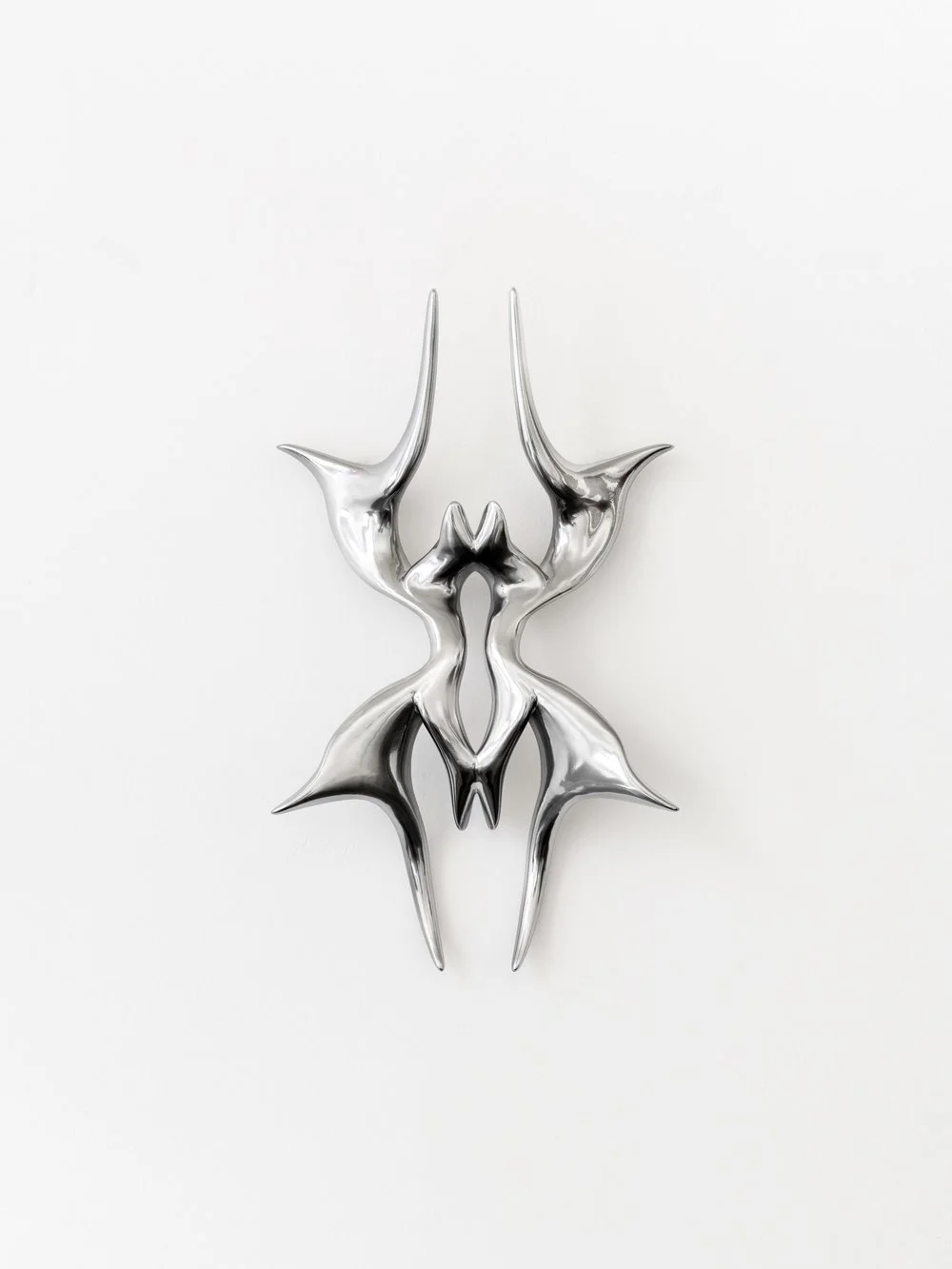
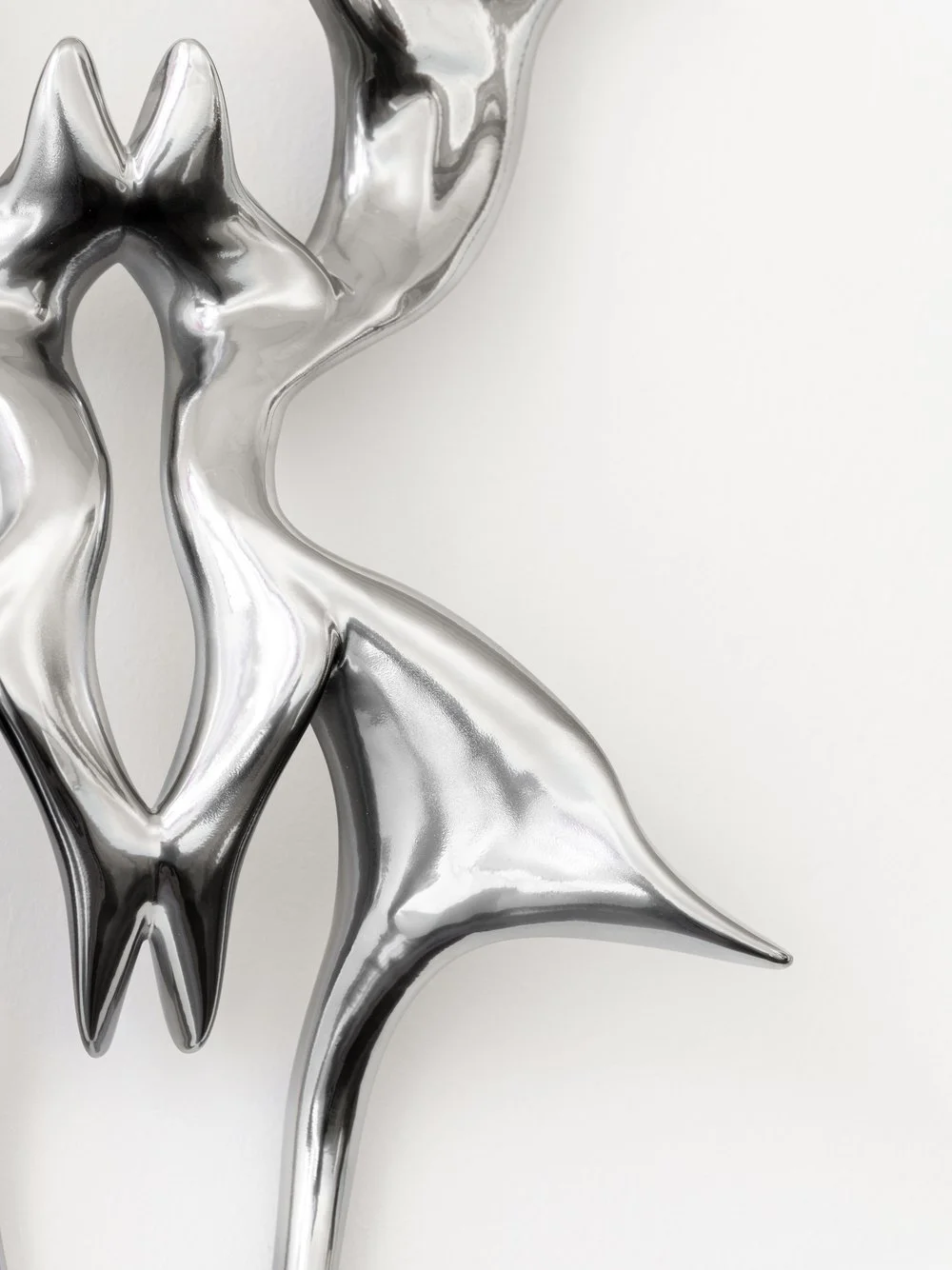
Q: How do you imagine a work with such a strong, otherworldly presence fitting into someone’s everyday living space? What kind of atmosphere do you hope it brings?
L: I’d like to think that these sculptures foster moments of imagination and reflection, creating a space for people to wonder about possibilities in their reality and daydream about other worlds, ultimately sparking imagination.
Q: Could you walk us through how you arrived at the exact curvature and symmetry of this form? Was it a digital process, a hand-sculpted one, or a mix of both?
L: I usually begin with a hand-drawn sketch, which I use as a guide inside my 3D sculpting software. While I’m sculpting, as if I were using traditional tools, it becomes a process of refining and molding the form. Although in this case I use vertices, I mold them into a desired shape by adjusting angles, scale, and distance. I achieve symmetry through different functions in the software, experimenting with the distance at which the mirrored counterpart of my initial shape merges. Once I’m satisfied with the shape, I begin defining the model's thickness so it can be 3D printed, as certain parameters must be met for it to be produced correctly.
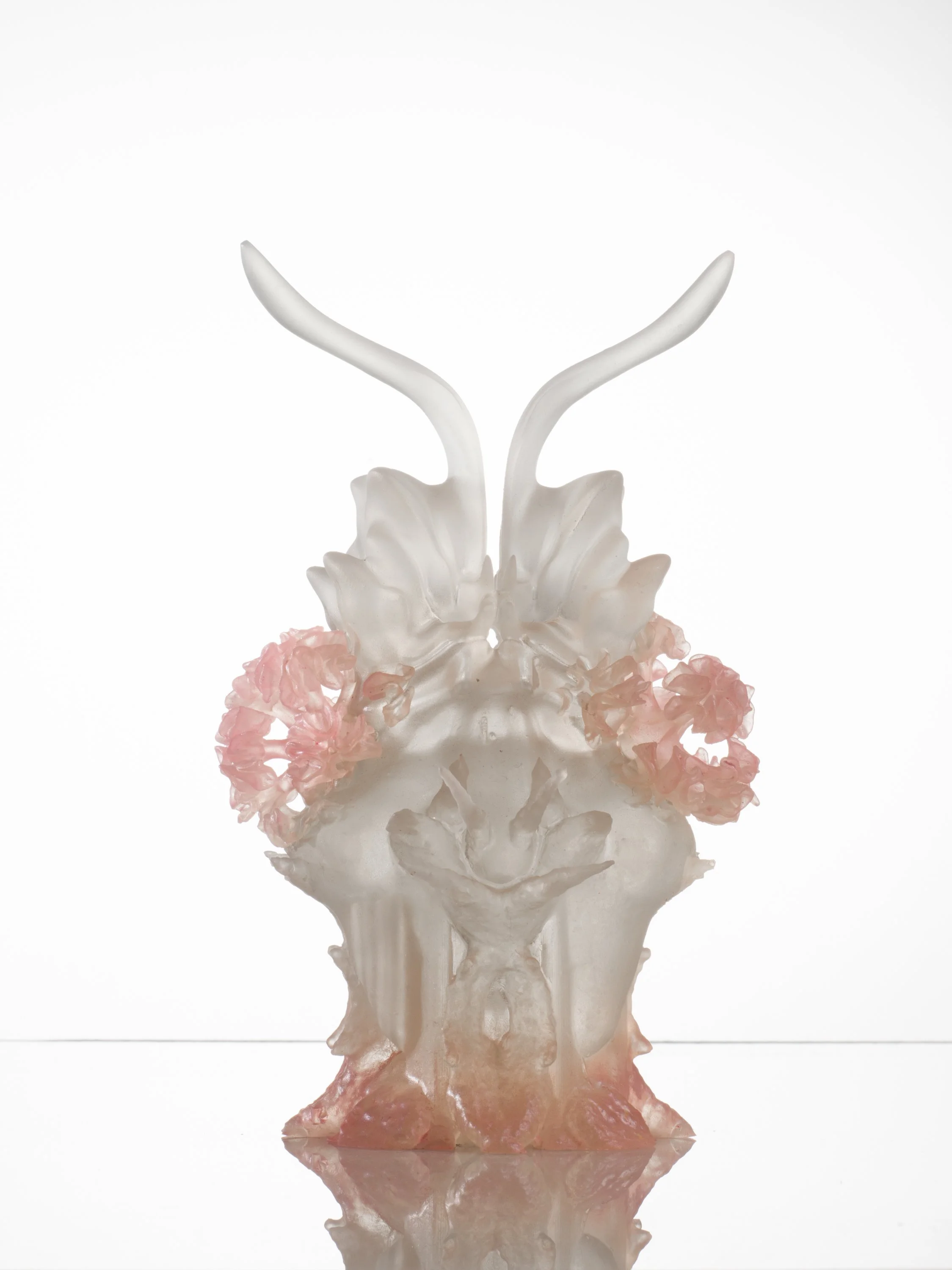
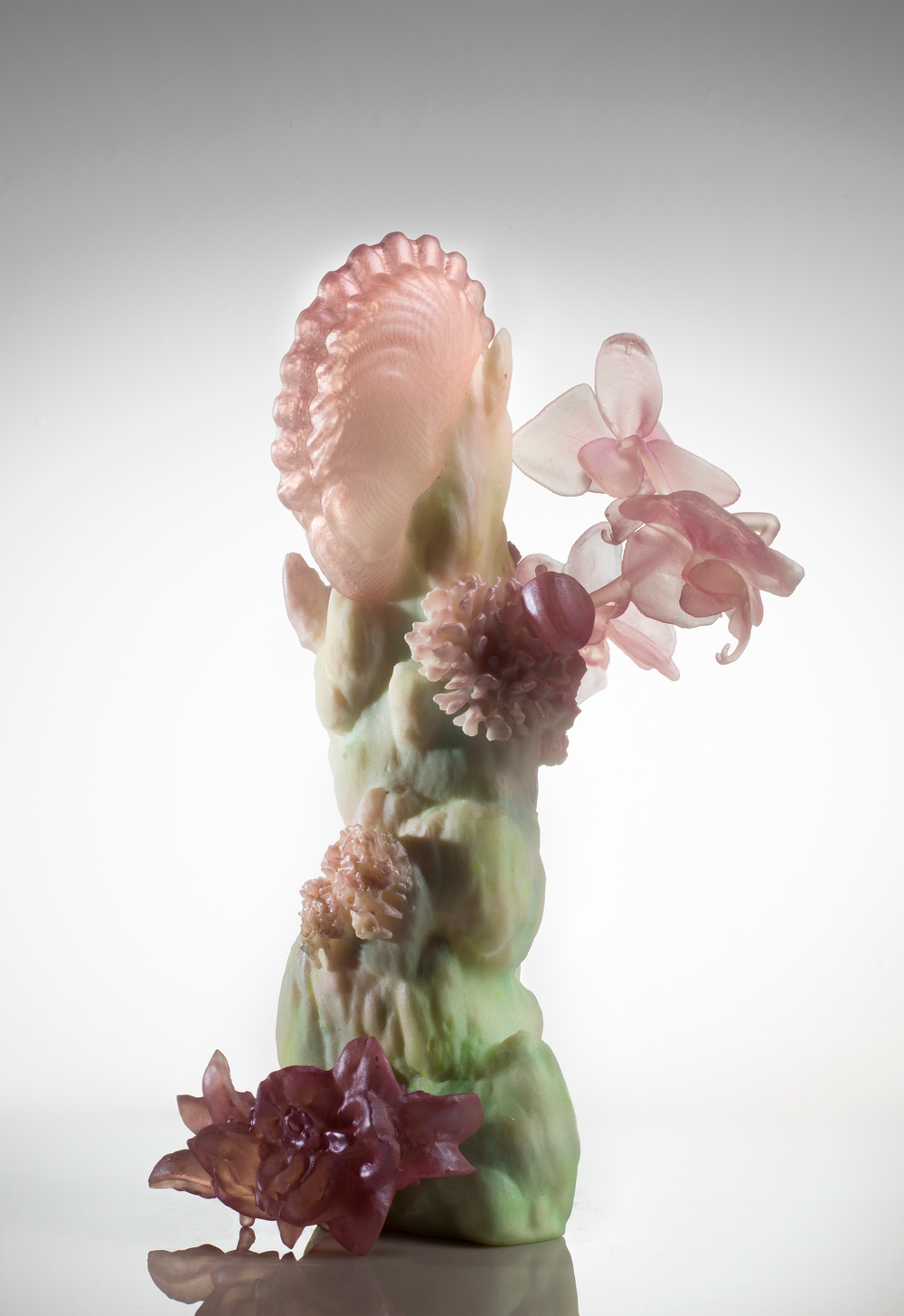
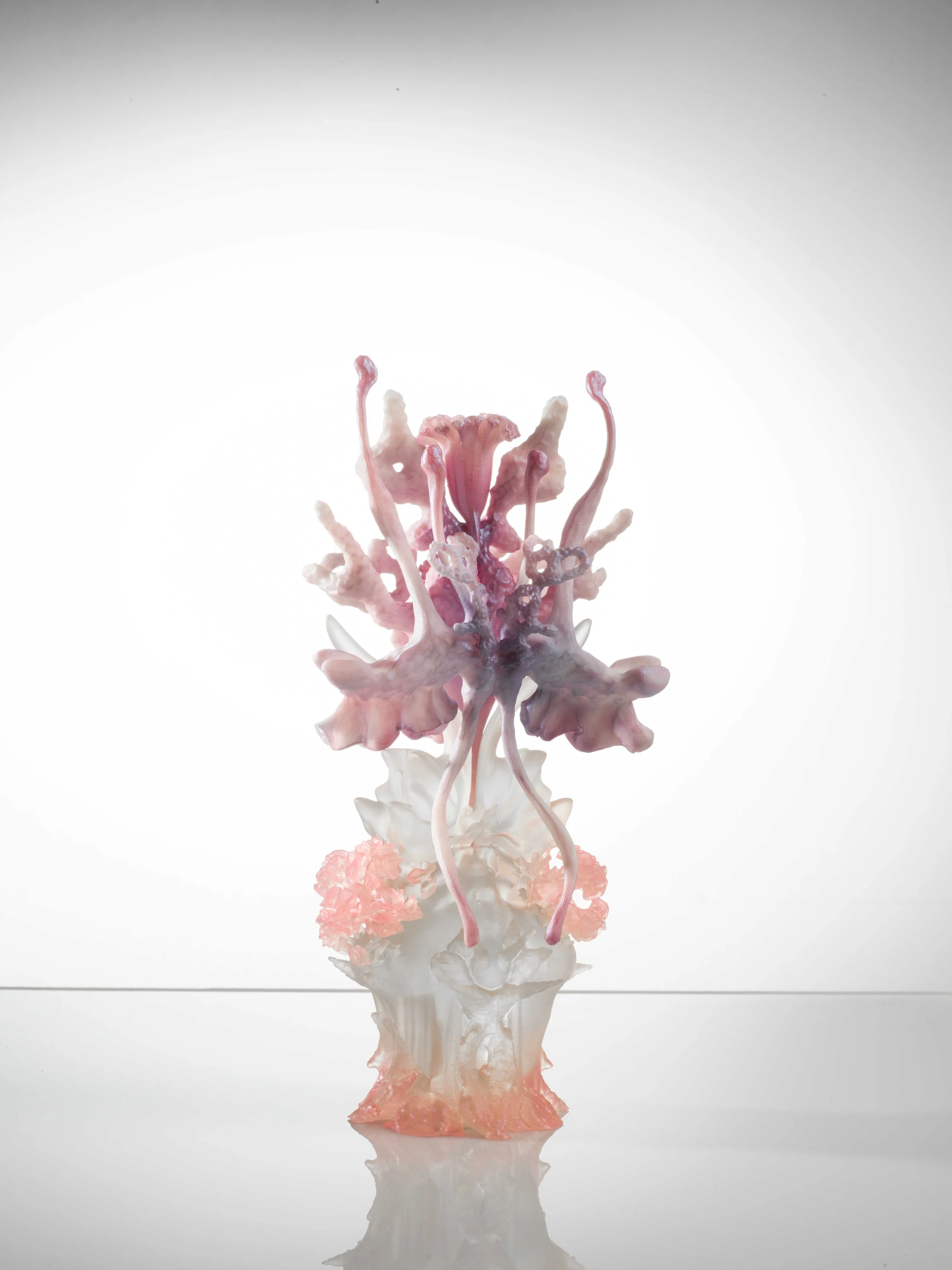
Q: Some parts of the sculpture feel anatomical, while others feel more abstract—was there a specific reference, memory, or visual world that shaped this piece?
L: As a highly visual person, my practice is very much linked to memory. For this specific piece, I was thinking about orchids, which have an otherworldly appearance to me, and praying mantises. It’s interesting how we can find similarities between our bodies and other organisms; this ultimately speaks to how design in nature can be linked through form, even across different species.
Q: As you keep developing this body of work, what aspects of form or material are you most curious about pushing further?
L: Currently, I’m interested in exploring organic form through objects I find in my day-to-day surroundings, to reflect this relationship between digital and physical, imagination and reality. A material I’m currently interested in exploring is silver, which has a long tradition of craft in Mexico. I feel that combining this technique with 3D printing could create an interesting dialogue between tradition and innovation
