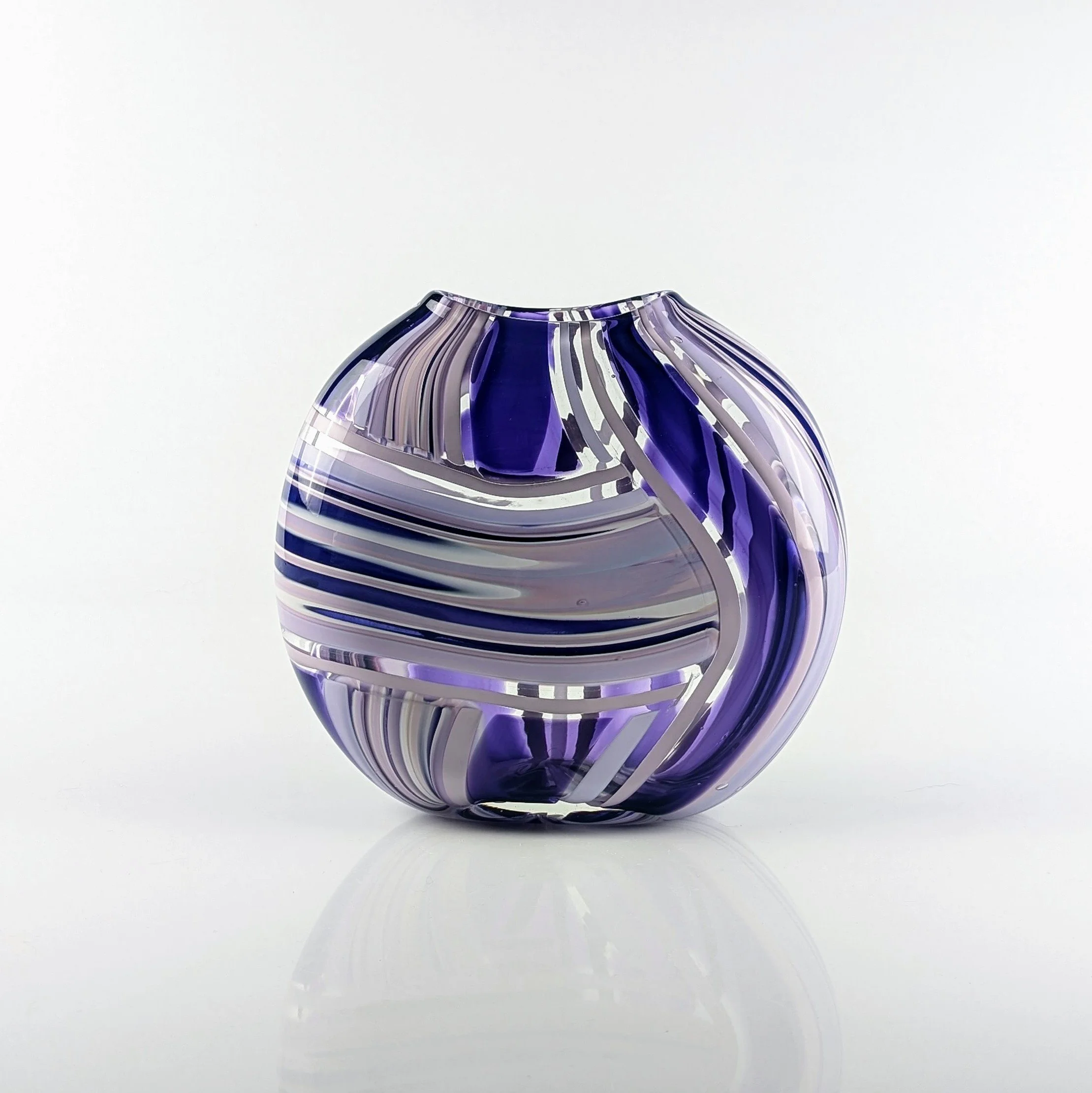
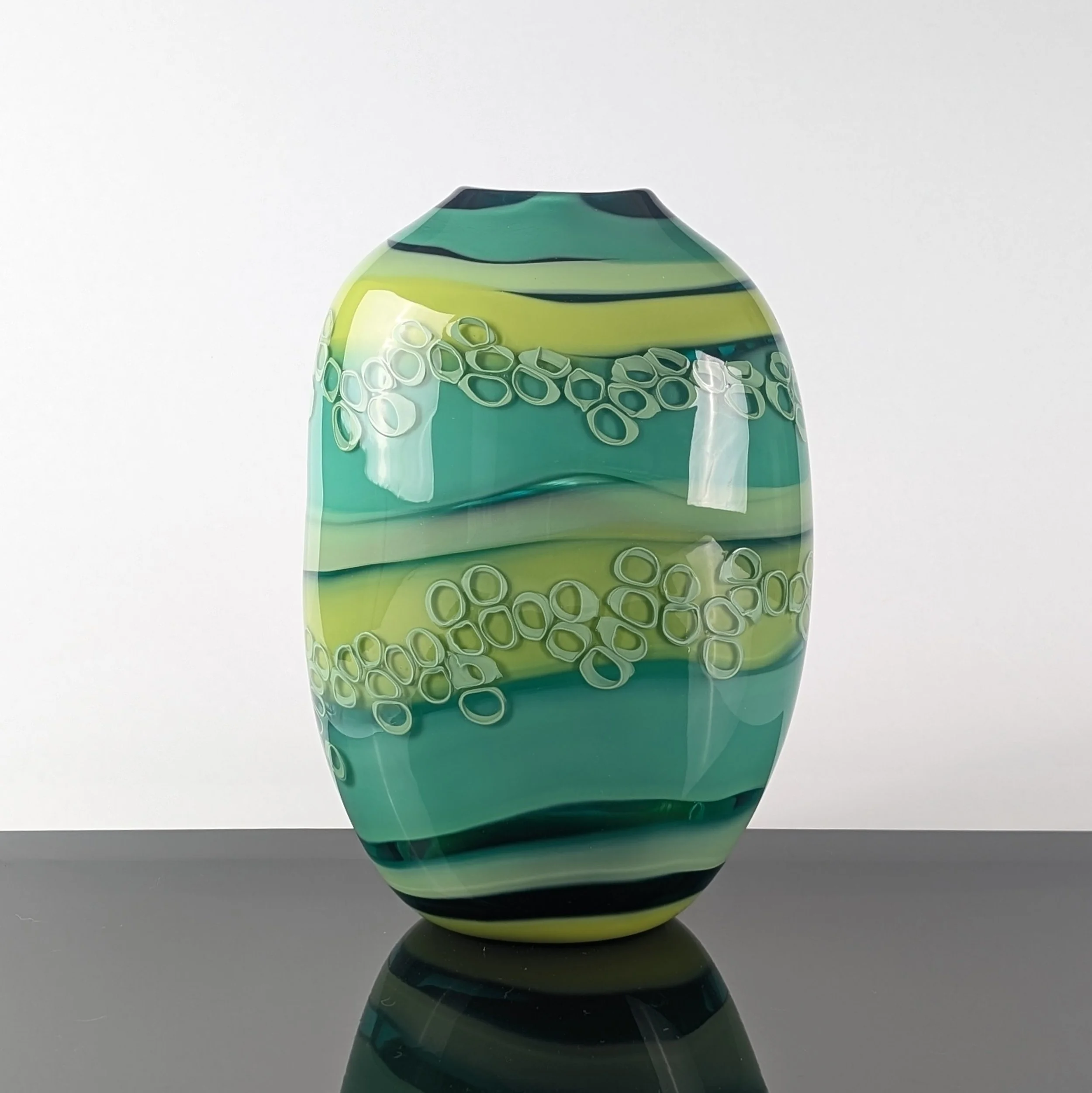
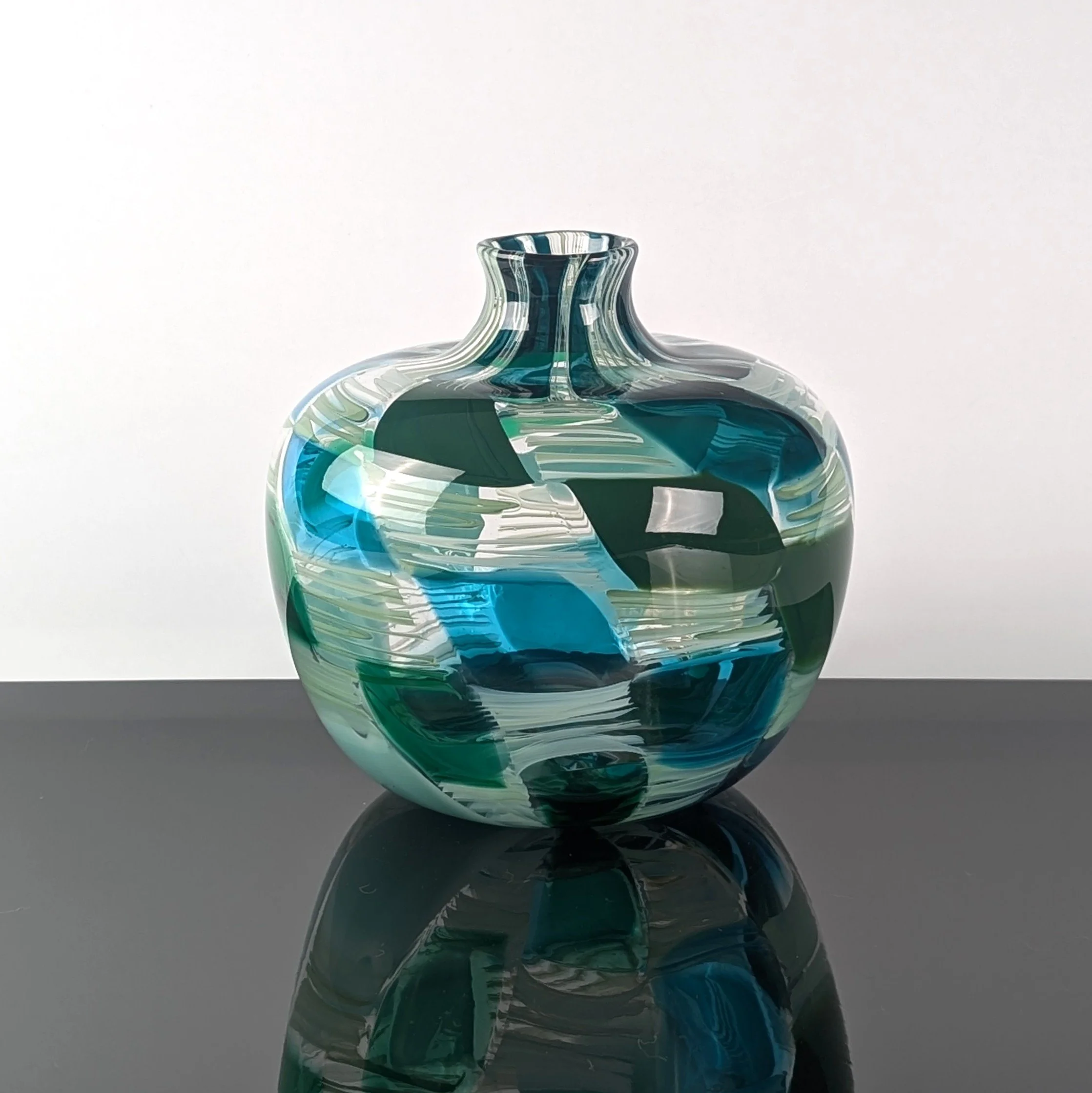
Shara’s glassblowing practice explores both the opacity and transparency of glass color. Over the past year, her approach to selecting colors has been inspired by vintage palettes from 1960s and 1970s home interiors. This influence led her to incorporate a centuries-old glassmaking technique: hand-stretching glass into canes, which are then cut, reheated, and hand-blown to create pattern-adorned vessels.
In this process, patterns often dictate form through the effects of heat, gravity, and continuous rotation, resulting in a cohesive relationship between shape and color.
Q: To begin, could you briefly introduce yourself and your practice?
S: My name is Shara Lynn Funari, and I’m originally from San Antonio, Texas. I currently live near Austin, Texas.
I’ve been blowing glass professionally for over 20 years. I work full-time as a glass blower, splitting my time between teaching and my own studio practice. I instruct Intro and Intermediate-level glass-blowing classes at Ghost Pepper Glass, a public-access glass-blowing studio, and I also run my art glass design brand, Star Party Glass.
Through Star Party Glass, I create small-batch collections of colorful glass products as well as original art vessels and sculptures featuring patterned designs.
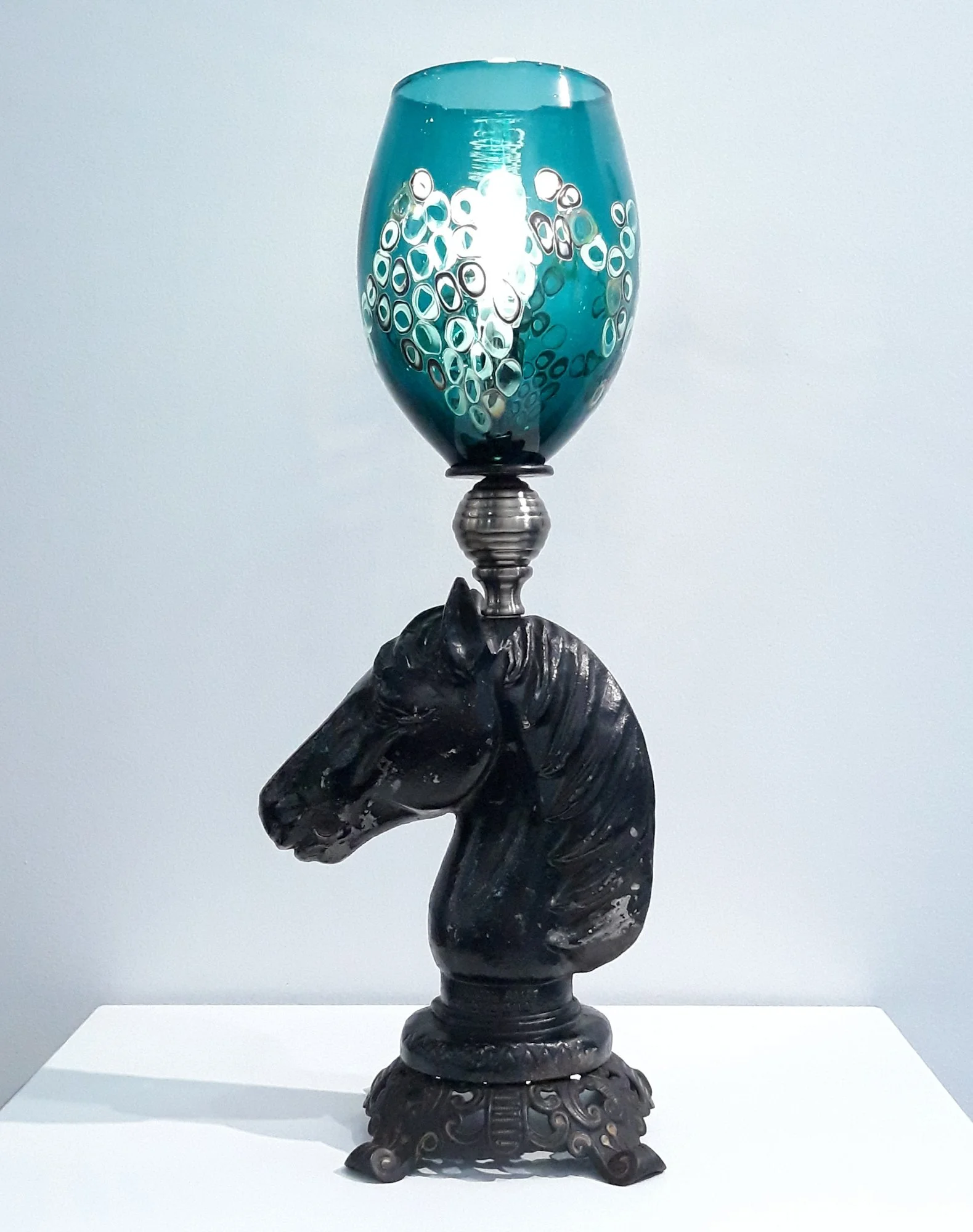
Currently, my favorite direction in glass is combining blown glass elements with antique or vintage accent pieces to create sculptural glass works that also function as lighting.
Q: Your bottle piece blends a playful, squeeze-like form with a very refined glass surface. What kinds of ideas about function and gesture were you exploring in this piece?
S: When I’m making each pour bottle by hand, I use calipers along the way to make sure each one is within set measurements. The process itself combines a consistent flow of heat, gravity, and inflation to shape each one by hand.
The pinched design is done HOT while the glass is moving. I use a rounded metal tool in each hand and time it just right to press the tools together, creating a pinched area for the hand that makes them easy to hold while pouring. It’s tricky!
That is what makes this product unique; each one will feel slightly different in the hand. I also make my own glass color mixes in an array of color combos, so it's been a fun exploration and learning experience with numerous glass colors.

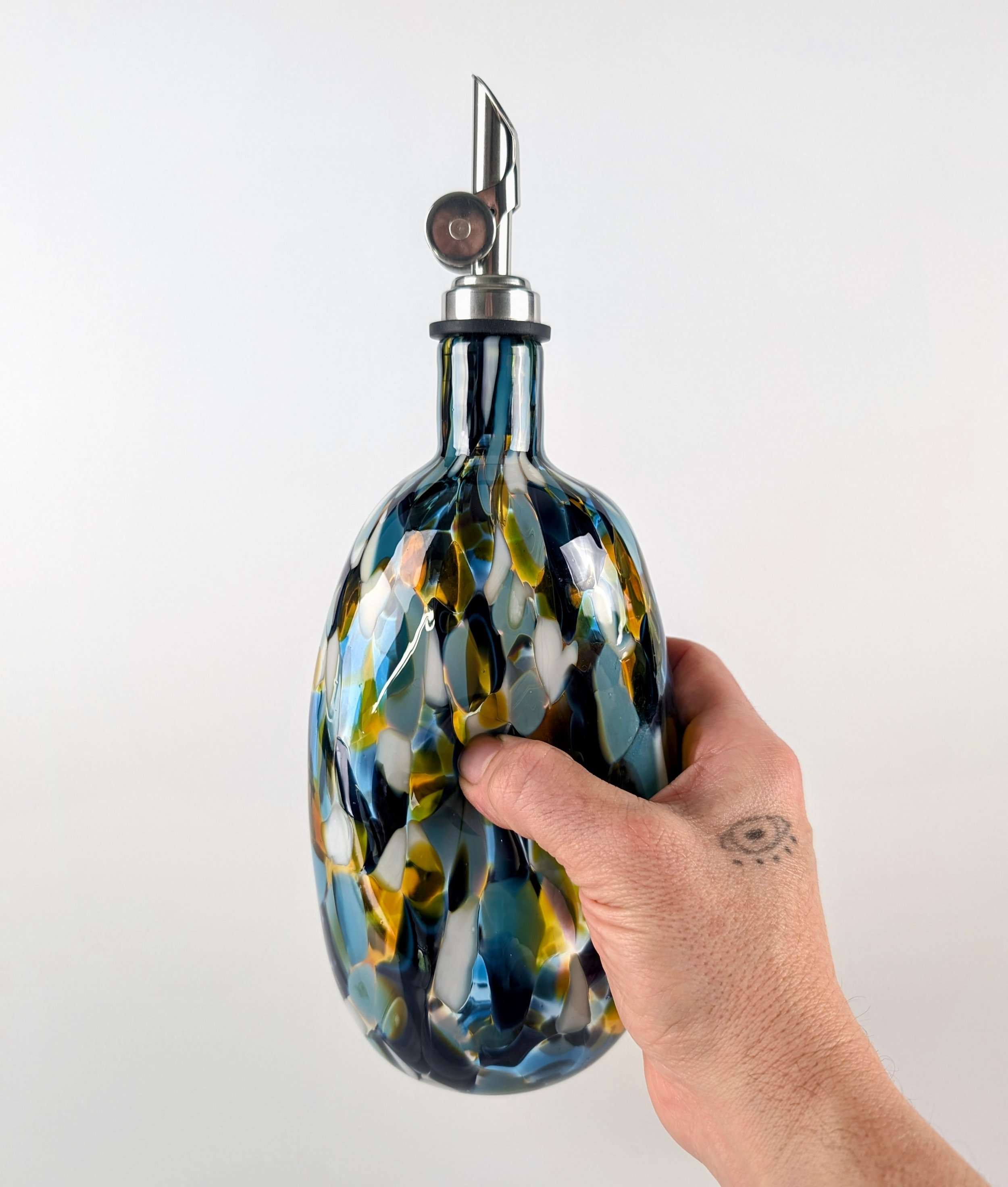
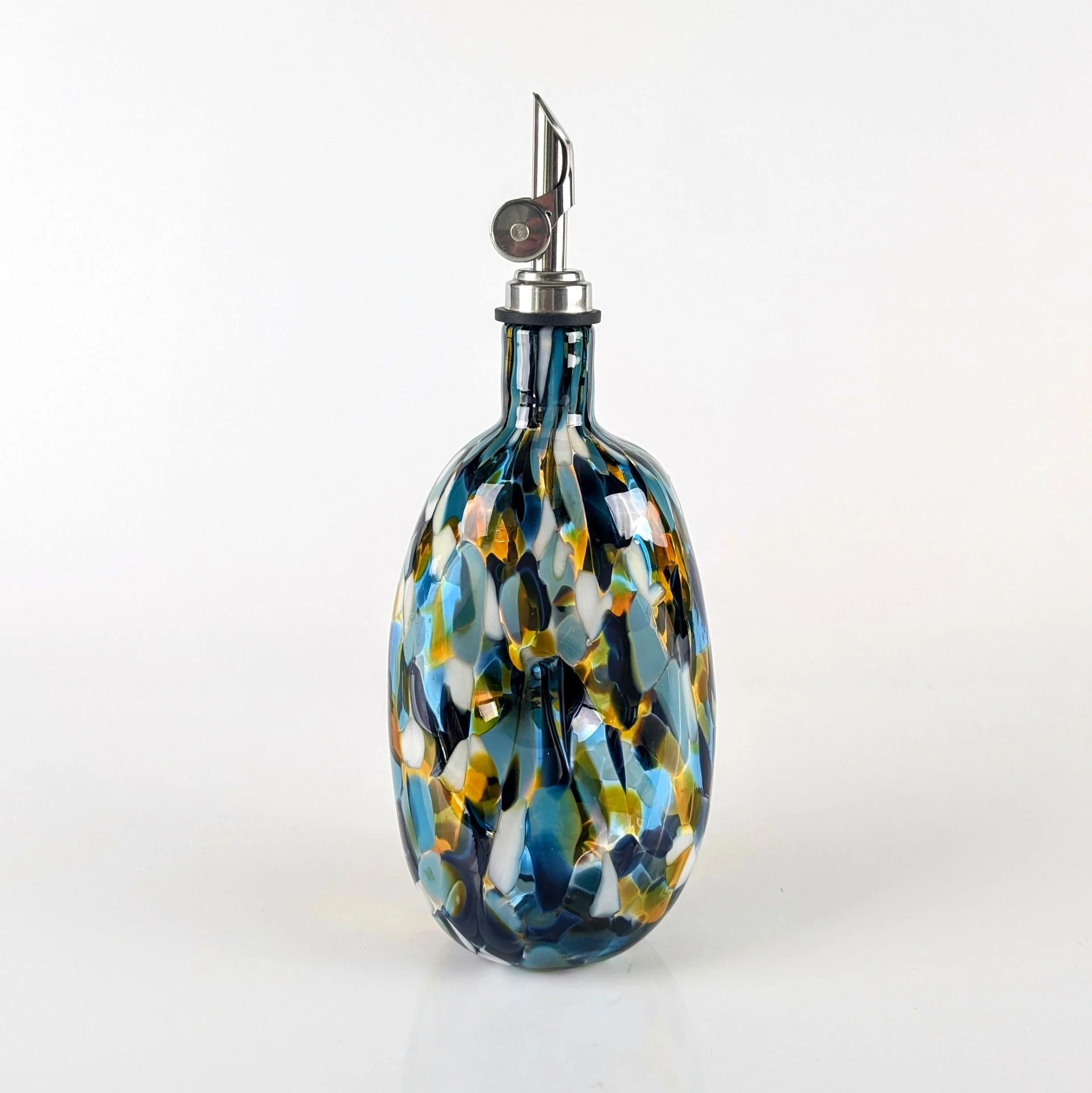
Q: The mottled patterns in your works create such a fluid sense of movement. How do you approach building color and transparency when working with blown glass?
S: This product has allowed me to explore a wide range of opaque glass color combinations. I use a type of glass color called frit to create an efficient process for adding color to glass.
Frit comes in small, evenly sized shards of both opaque and transparent glass. I mix different colors together and roll the molten glass through this blend of colorful shards. The shards quickly melt onto the surface, creating a mottled, multicolored pattern.
Because I work the design while the glass is still molten, the pattern moves with the material as I use heat and gravity to stretch and shape the glass. The result is a fluid-looking surface with visual movement created by the small pieces of colored glass.
Since many people like to use these bottles for olive oil, I usually center my color combinations around two or three opaque glass colors, with small amounts of transparent glass mixed in. This helps break up the opacity while still preserving the beautiful translucency that is characteristic of blown glass.
Q: When someone uses the pour bottle, lamp, or vase in their living space, what kind of everyday experience do you hope it adds or changes?
S: When you surround yourself with handmade objects, I think this creates a direct connection to your surroundings. In my case with Star Party Glass, I like to design products and art pieces that allow folks to enjoy more color in the spaces they occupy the most. My art pieces that also function as lighting have a way of telling a story in the rooms they illuminate.
Q: As you continue developing functional glassware, what aspects of form or color interaction are you most excited to investigate next?
S: Because I adore working with glass color, over the last 20+ years I’ve developed experience with how glass colors move when heated. Glass is a fluid material at 2000 degrees, so my initial product designs always begin with figuring out the most efficient process to make that object.
Glass making has very high overheads so efficiency is key to be a successful product designer in handmade glass. I will be prototyping a butter crock soon! I like to make my own butter so I’m excited to test some designs in my own kitchen. This year I’m excited to explore glass colors in earthy, neutral tones. This will be a big departure from my usual bold color palettes!