Elise Holly
Elise Holly channels the intensity of dance, memory, and Southern culture into fluid, emotionally charged scenes, where movement, color, and intimacy converge to tell sensual, human stories.
Q: Your paintings often capture people in moments of passion and movement. What draws you to these emotionally intense scenes?
E: I was drawn to paint an idea of a couple dancing that came from my love for dancing. Those with southern background, like me, are aware that dancing is embraced on every occasion, indoor or outdoor, etc especially the Texas Two Step.
Dance off's in the inner streets of Atlanta, for example, also heavily embrace this passionate act.
Dancers, overall, have been known to brave all environments and weather conditions for the love of it.
Dancing is a universal expression everywhere. It is art."
Q: Movement feels central in your work. How do you translate physical motion into your brushwork and composition?
E: Physical movement in a painting is simple for me, but it's much more powerful than just feeling in the work. It is also the soul in the work that plays a huge role for the physical movemen. My work, entitled "Savannah Nights", is meant to capture the intensity of a woman being swept off her feet by a man, romantically. I wanted to combine the forbidden love story of "Romeo and Juliet" with a "Dirty Dancing" type of movement..
I have an old picture of my late grandparents staring passionately into one another's eyes, holding one another tightly, as they danced in the hallway of their home. I can still feel their chemistry looking at their picture to this day. The painting is also their love story in a way. Who doesnt want that type of love story? I still want that love story and I want to inspire others to believe in that.
I kept their soul and movement and translated that into each brush stroke..
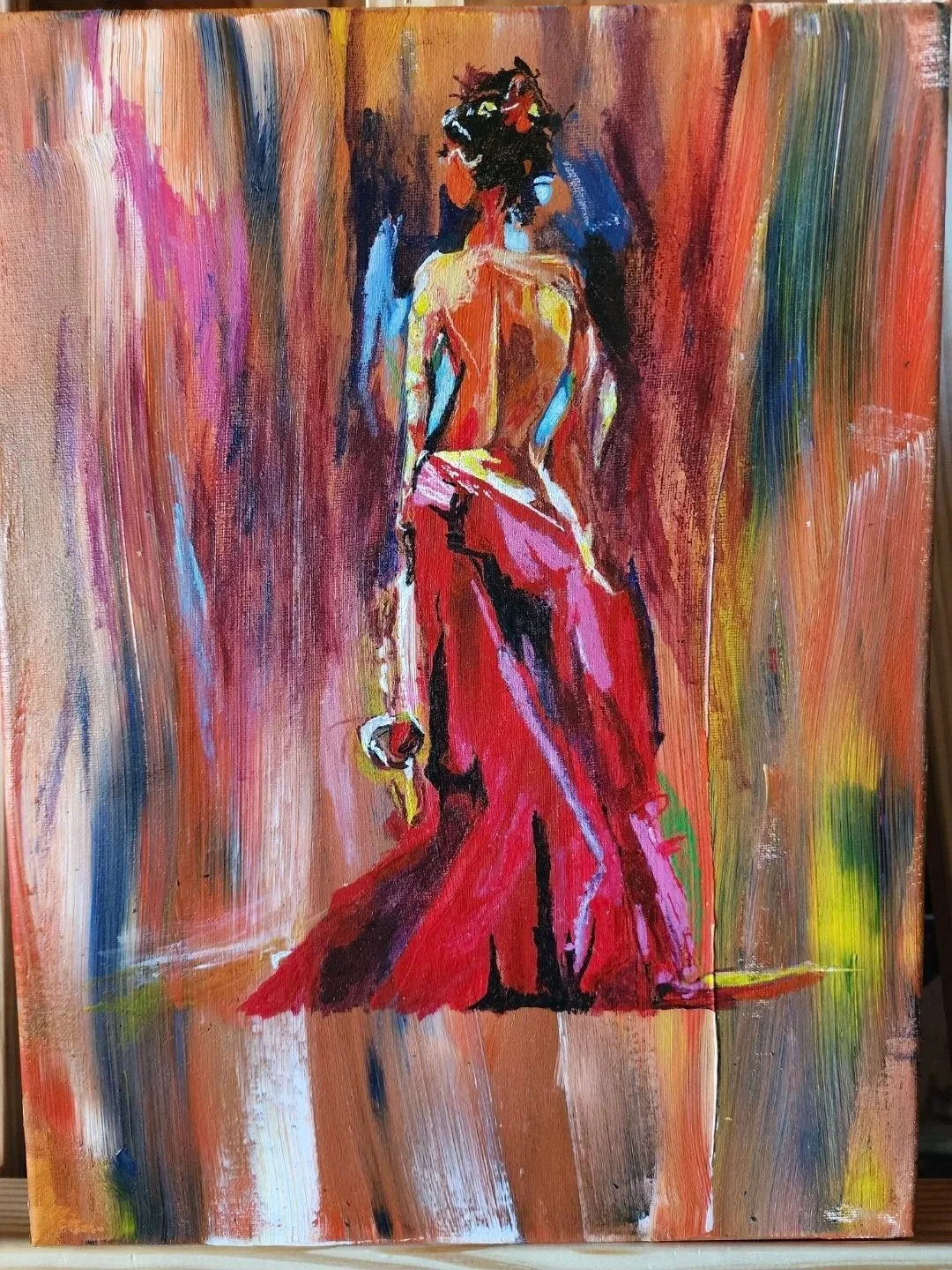
Q: Color plays a strong role in your paintings, especially bold reds and deep contrasts. How do you approach choosing your palette?
E: The color palette is a great question—I love this one. Color selection is fascinating to me. My choices are usually based on the story I want to tell. Take romance, for example: what are the colors of love and romance? And is the story about a hidden love, or one that is openly joyful and revealed?
For a hidden romance, I might subtly add some lighter tones somewhere high in the background to soften the mood a bit, though the palette would remain mostly darker. In the end, it all depends on the direction the artist wants the artwork to take.
Q: The backgrounds in your work often feel abstract and fluid. What role do they play in shaping the atmosphere of each piece?
E: The Fluidity in my abstract art has often played a huge role in shaping the atmosphere in my work, yes. In my "Savannah Nights" painting, for example, I found that adding more water beneath the couple's feet enhanced the fluidity, rather than painting them just dancing. I had an idea and suddenly added something to the painting, and found it worked better in the flow and emotion. This is common with artists. Nothing is wrong with a new direction in art. It is a beautiful rule. The idea is to enhance the atmosphere by increasing the movement. I am currently working on a painting that has faster-paced movements.
Q: You primarily work in acrylic. What attracts you to this medium, and how does it support your expressive style?
E: I work mainly with acrylic. It’s the medium I started with and the one that has worked best for me so far. It could change at any time, but there’s no particular reason for that right now.
Q: Looking ahead, how do you see your work evolving? Are there new themes or directions you’re interested in exploring?
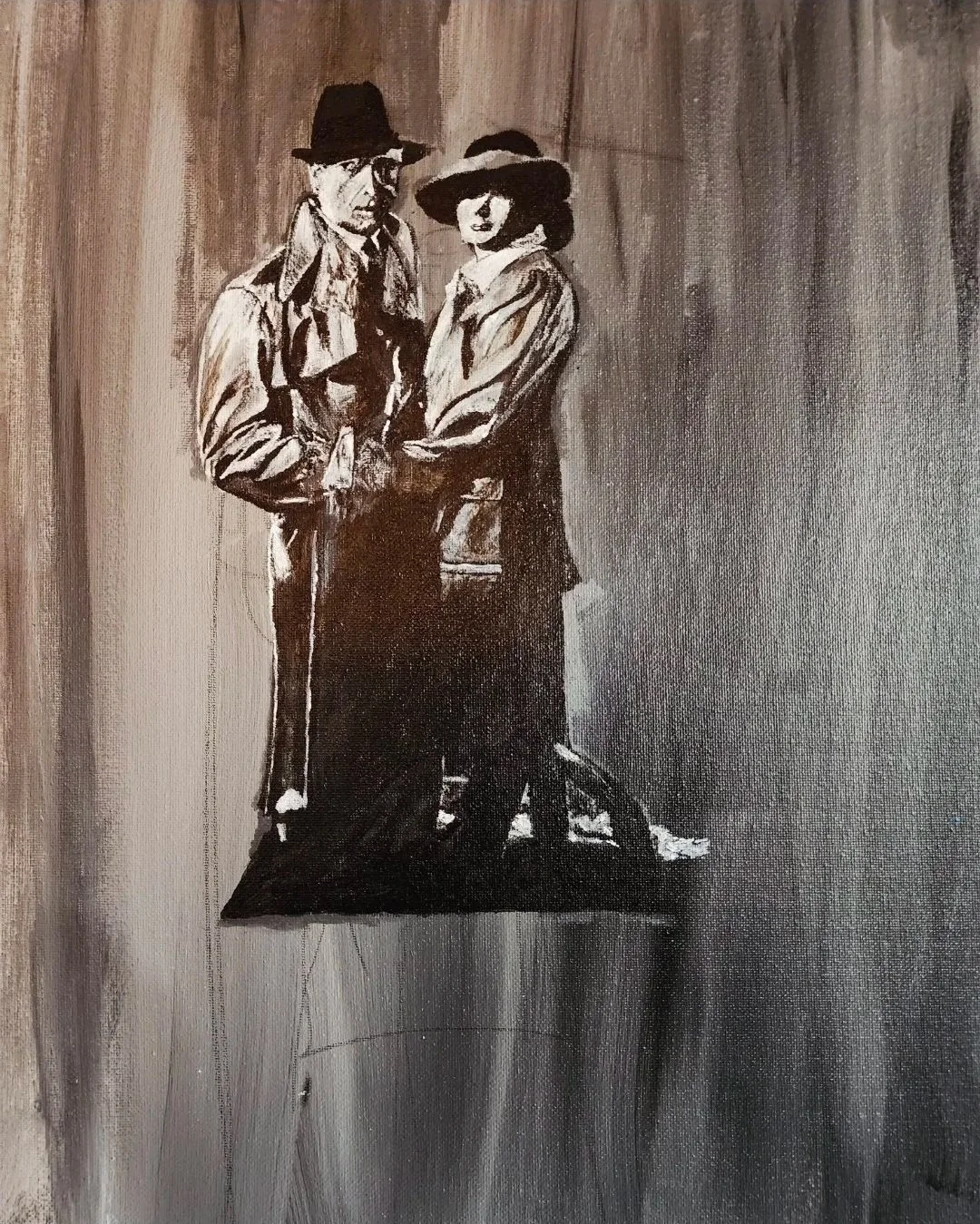
E: Yes, I do see my work evolving as an artist. I hope my work evolves every day. My plan for my work in this world is to use my paintings to raise awareness to help fight causes like Sex Trafficking. There are so many causes. I want my work to make a difference. Personally, I have always wanted to explore pottery as another way to grow in art.
