Sarah Feingold
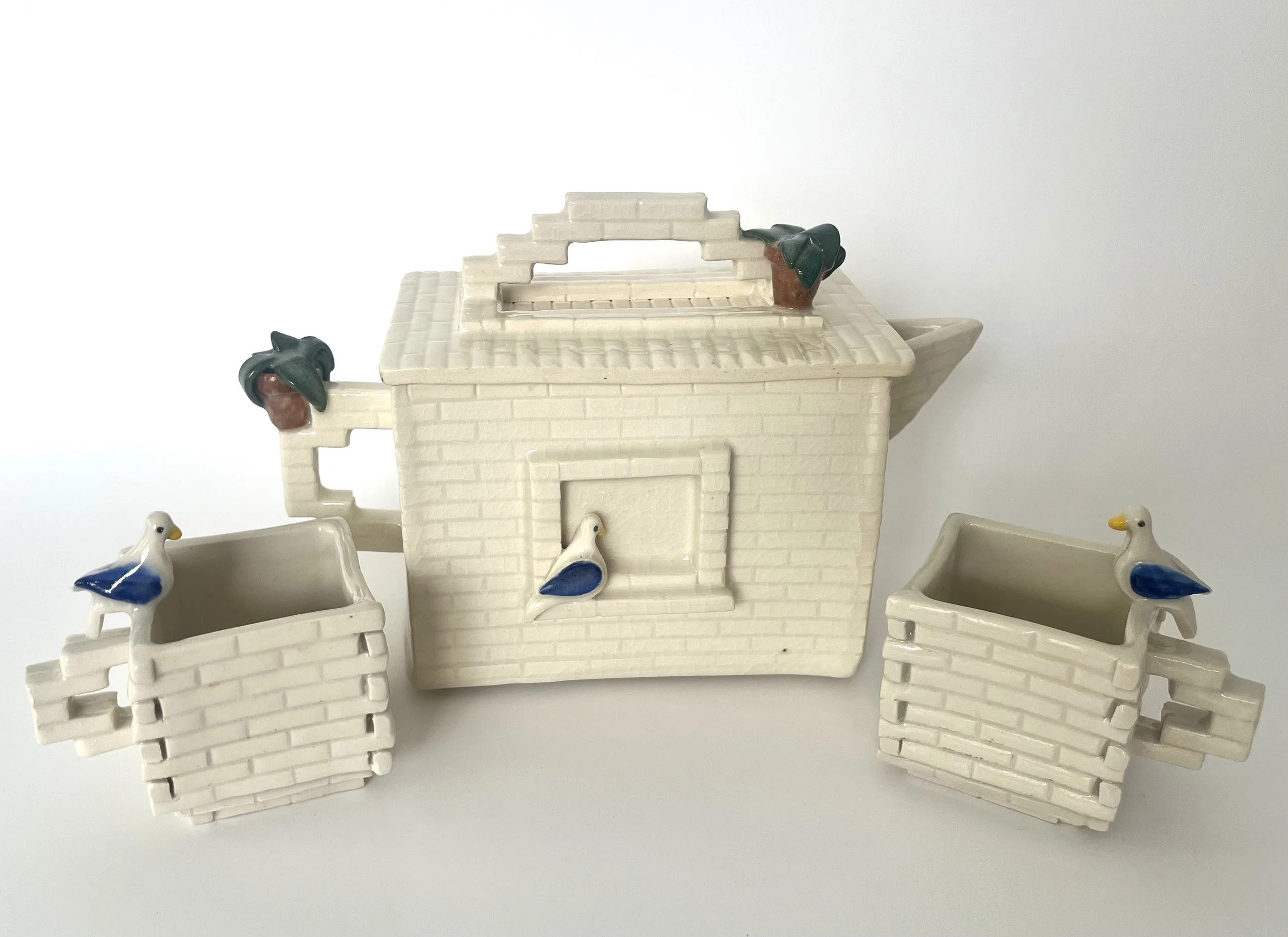
Inspired by Brooklyn’s busy streets and friendly wildlife, Sarah Feingold’s award winning ceramics explore the intersection of nature and urban environments. These whimsical pieces can be found in select galleries and boutiques. Sarah is also an attorney, a professor, a writer, and a mom. Sarah's first children's book, T is for Traffic Cone, is scheduled to be published later this year. Sarah is represented by Curated Edge Art Agency.
Q: To begin, could you briefly introduce yourself and your practice?
S: My name is Sarah Feingold, and I'm the Brooklyn-based artist behind Tinebird NYC. My ceramics tend to blend function with levity as they explore the intersections between nature and urban life. I am also a writer, an attorney, a professor, and a mom. My first children's book, T is for Traffic Cone, invites young readers and their adults to enjoy the humor and everyday surprises of urban life. The book is scheduled to be published later this year.
Q: When you’re working with ceramics, what kinds of everyday moments or emotions tend to find their way into your pieces?
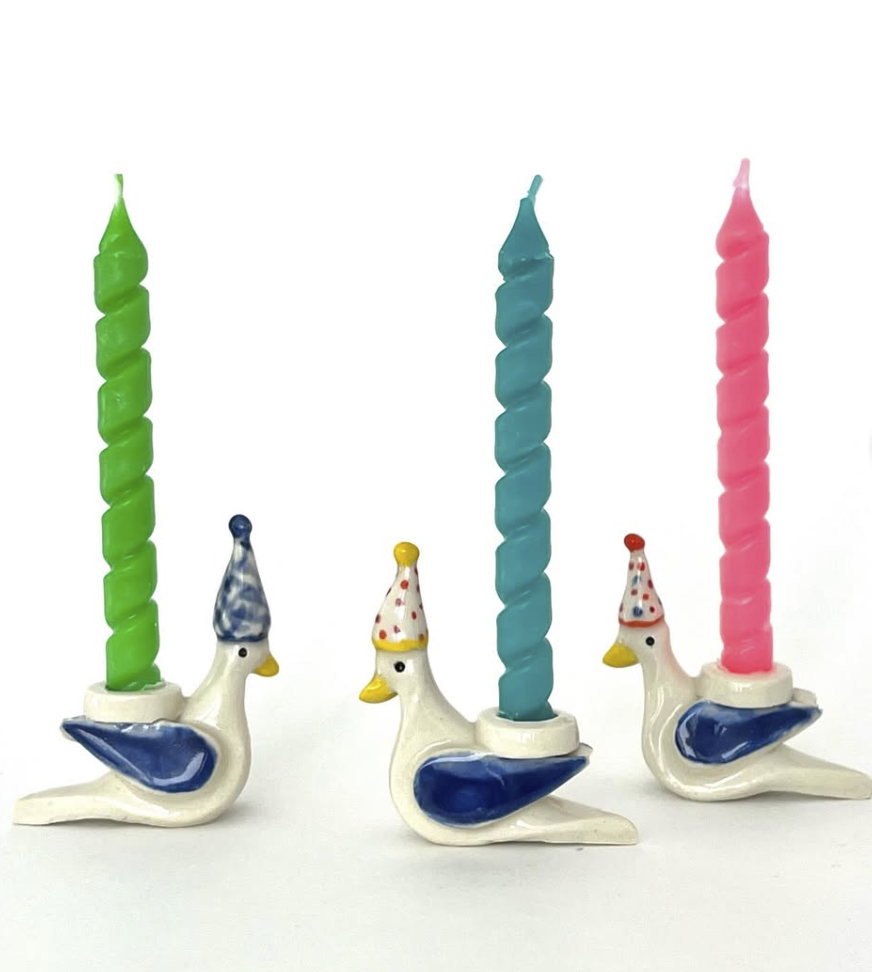
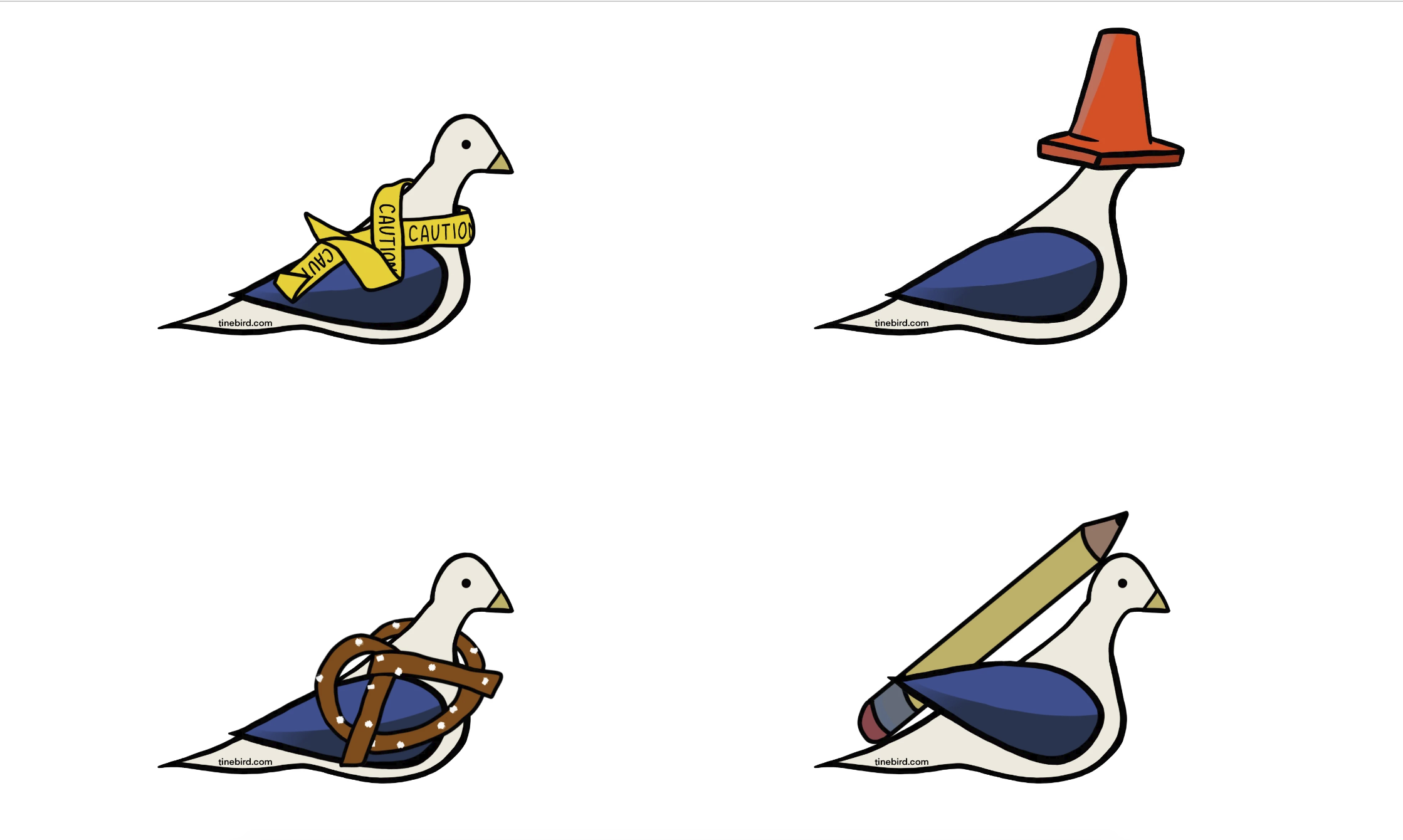
S: Tinebird is inspired by my vibrant city, where pigeons hop down the sidewalk alongside construction and commuters. I hope my pieces reflect the joy I feel as I cut, sculpt, paint, and glaze the small works of art.
Q: Across your work, you often use playful, tactile forms that reference everyday New York elements like pigeons or street barriers. What inspires this approach, and how do you think about playfulness as part of your visual language?
S: Play is central to my creative process. And play requires freedom and imperfection. My shoes get dirty as I walk around my city, taking in my surroundings and searching for a way to communicate beauty in the ordinary. In the studio, my hands get dirty as I create art, inspired by the outside.
Q: How do you imagine functional objects shaping the mood of someone’s living space on a day-to-day level?
S: I hope that my small and carefully constructed objects bring day-to-day joy. Sometimes the world feels dark and I hope my art offers some light.
Q: Could you share how the idea for the “THANK YOU” vase came about? Was there a specific moment that made you want to bring that graphic into a ceramic form?
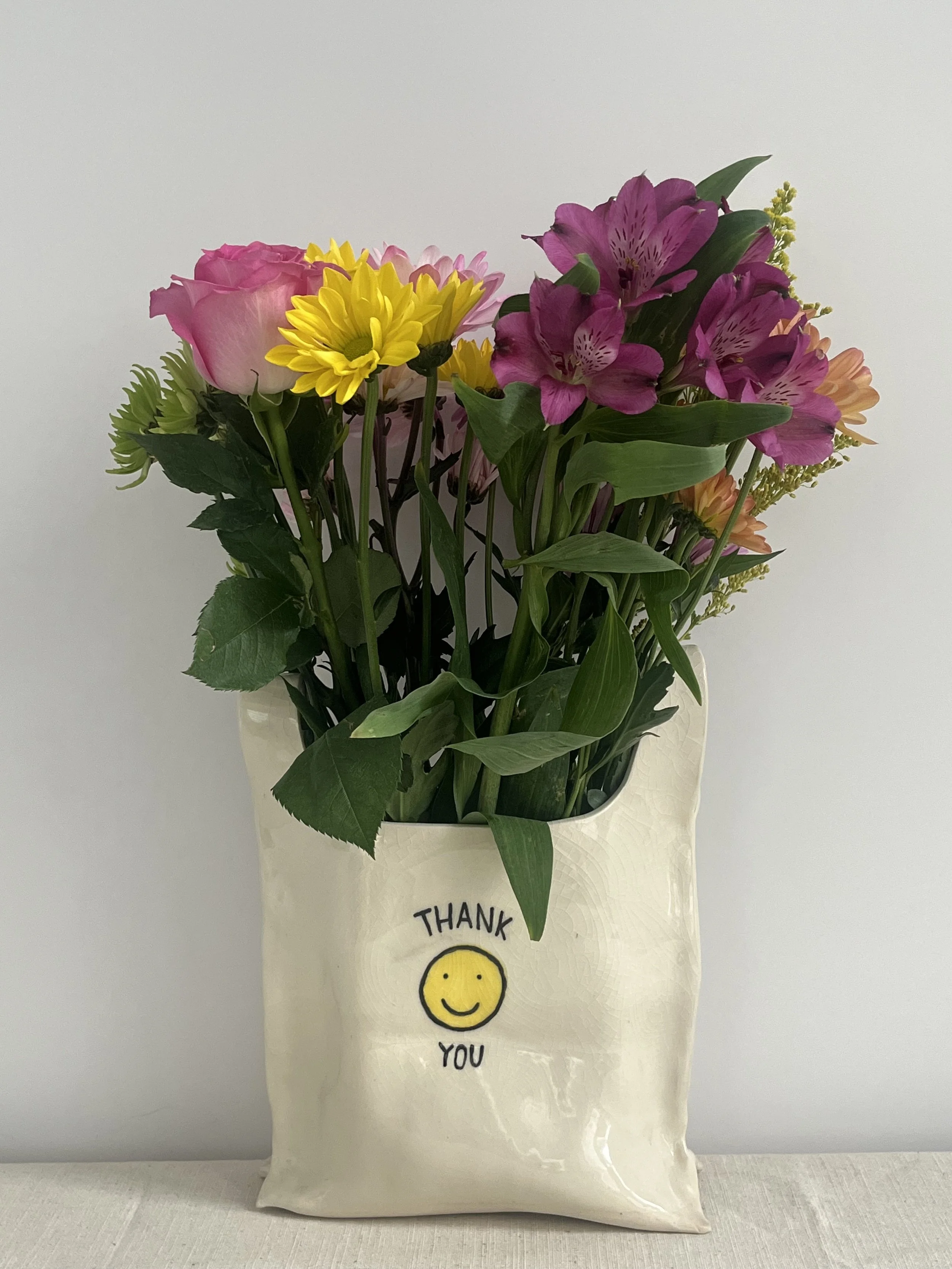
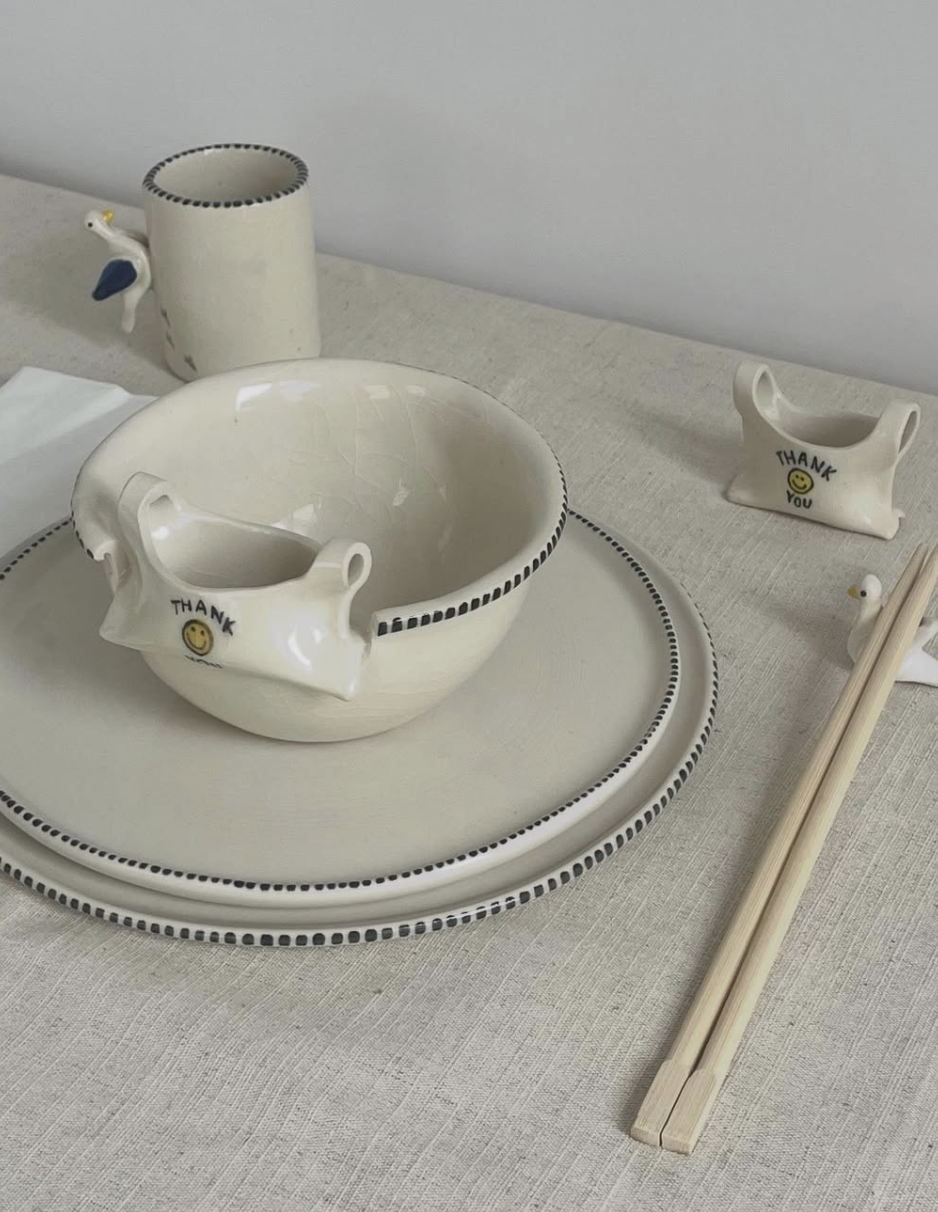
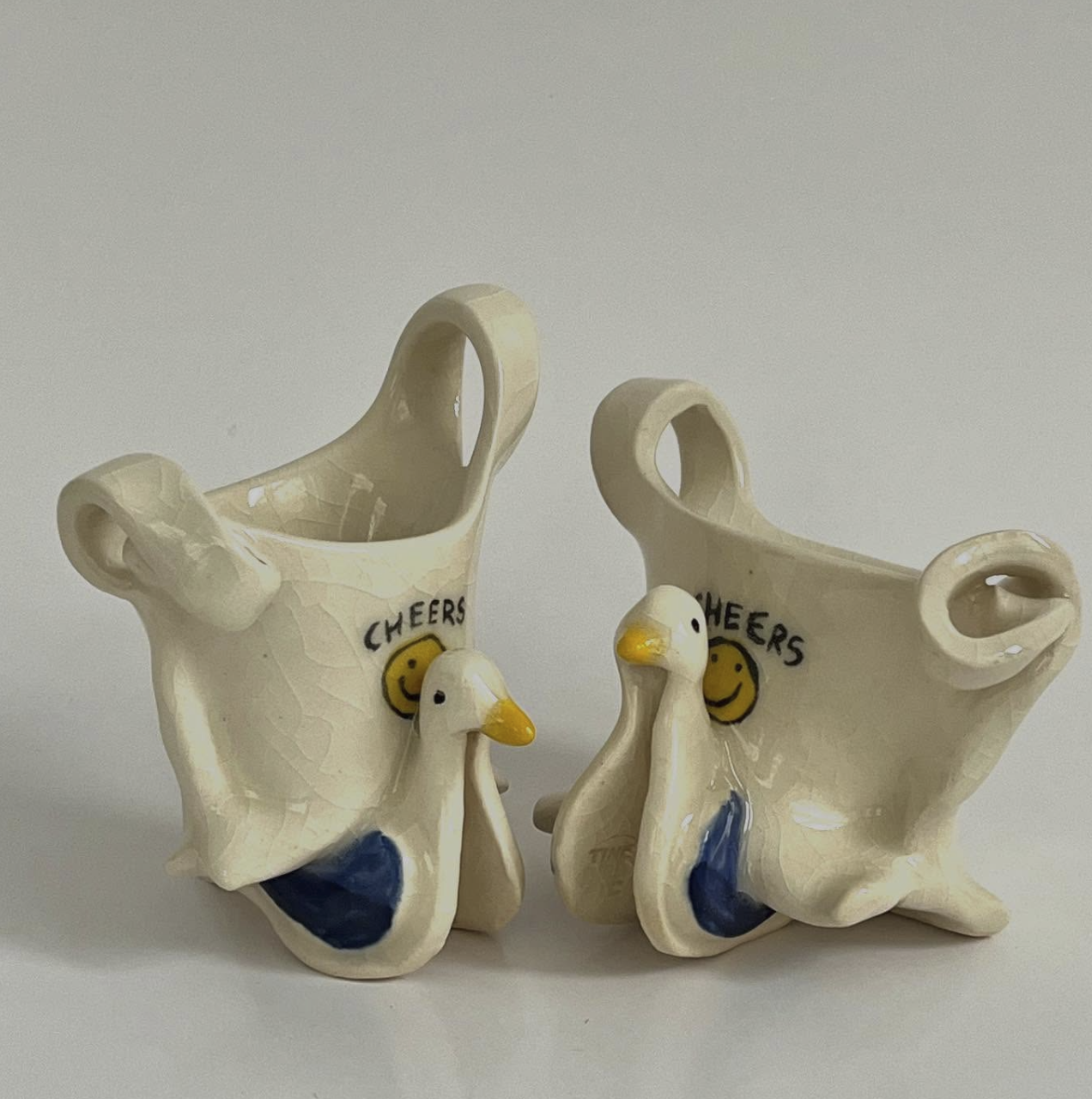
S: My “Thank You” vessels were inspired by progress, convenience, what we throw away, and our relationship with single use plastic. I spend time carefully constructing and hand writing "Thank You" on each permanent ceramic form. The forms reflect the polite and temporary plastic versions that are often discarded or float in the breeze. I hope the final art serves as a reminder of these iconic bags, what we carry with us, what we leave behind, and what we have to be thankful for.
Q: As you keep working with functional ceramics, what are you currently curious to experiment with—whether in form, scale, or surface texture?
S: I experiment with form, function, and scale while focusing on a consistent aesthetic. I attempt to retain emotion as I strip away detail and add saturated color. I hope that my larger and smaller pieces are aesthetically consistent and appear to live in a world together. The audience must get intimate with my smaller work to take in the subtle details.
Q: For you personally, what makes an object cross that line from being simply “useful” to something someone can emotionally live with?
S: I tend to connect to pieces that are simple, unusual, functional, and a little bit weird. We are all curators of our own lives. And living in a city typically means that we have smaller spaces with fewer (and maybe more meaningful) objects. I hope that my pieces can be useful but also serve as a reminder to find joy outside, inside, and on a shelf.