Hillary Henrici
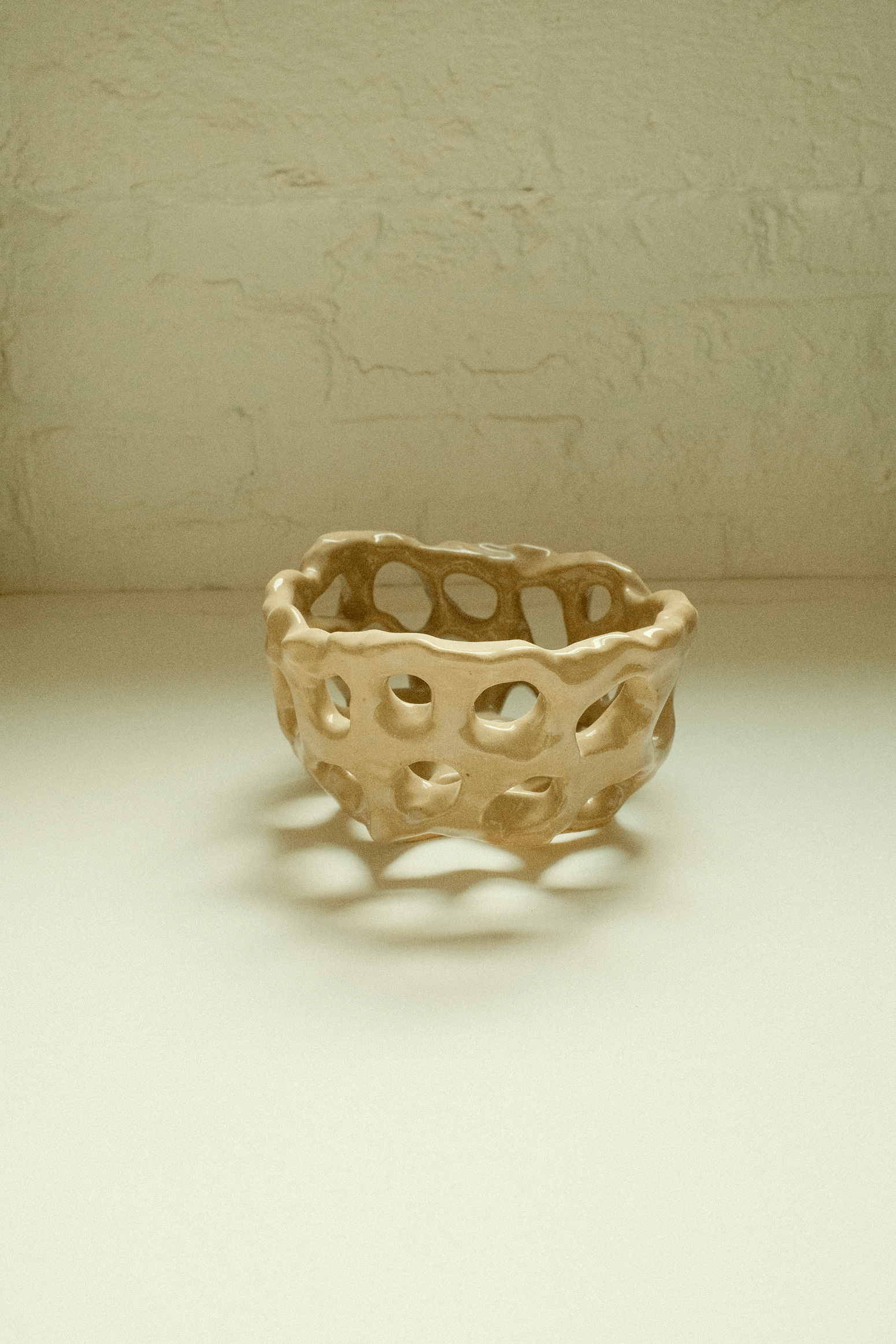
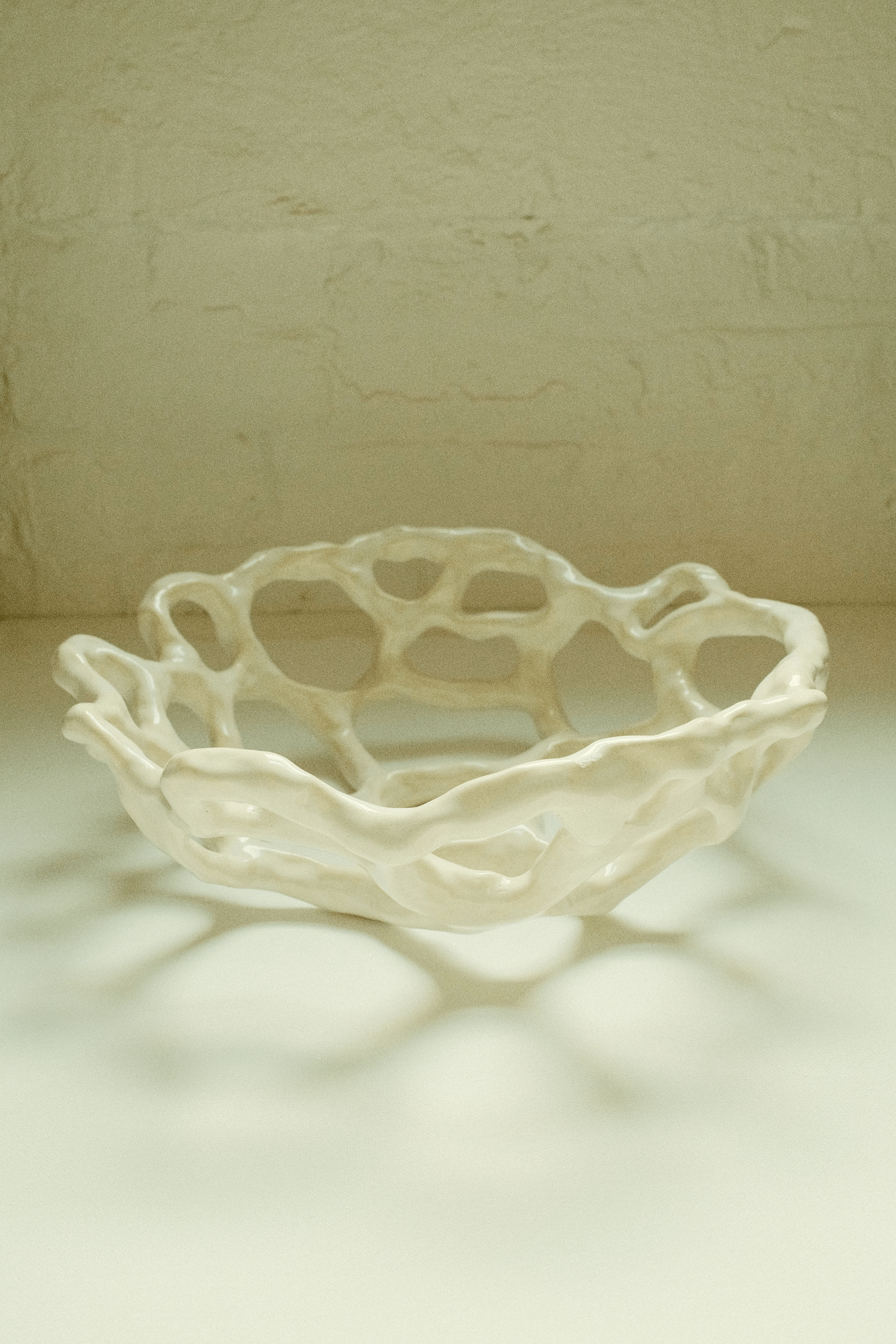
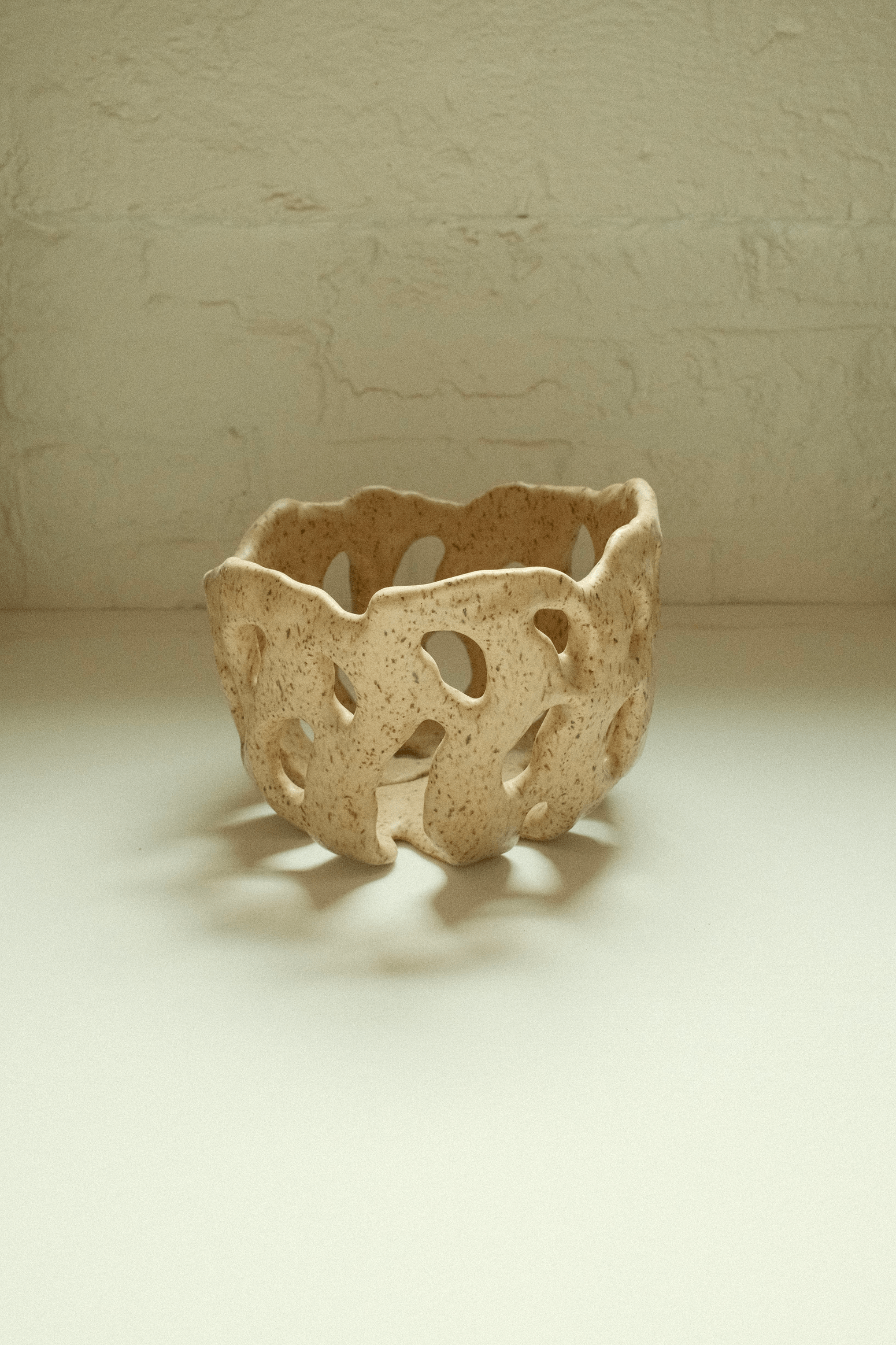
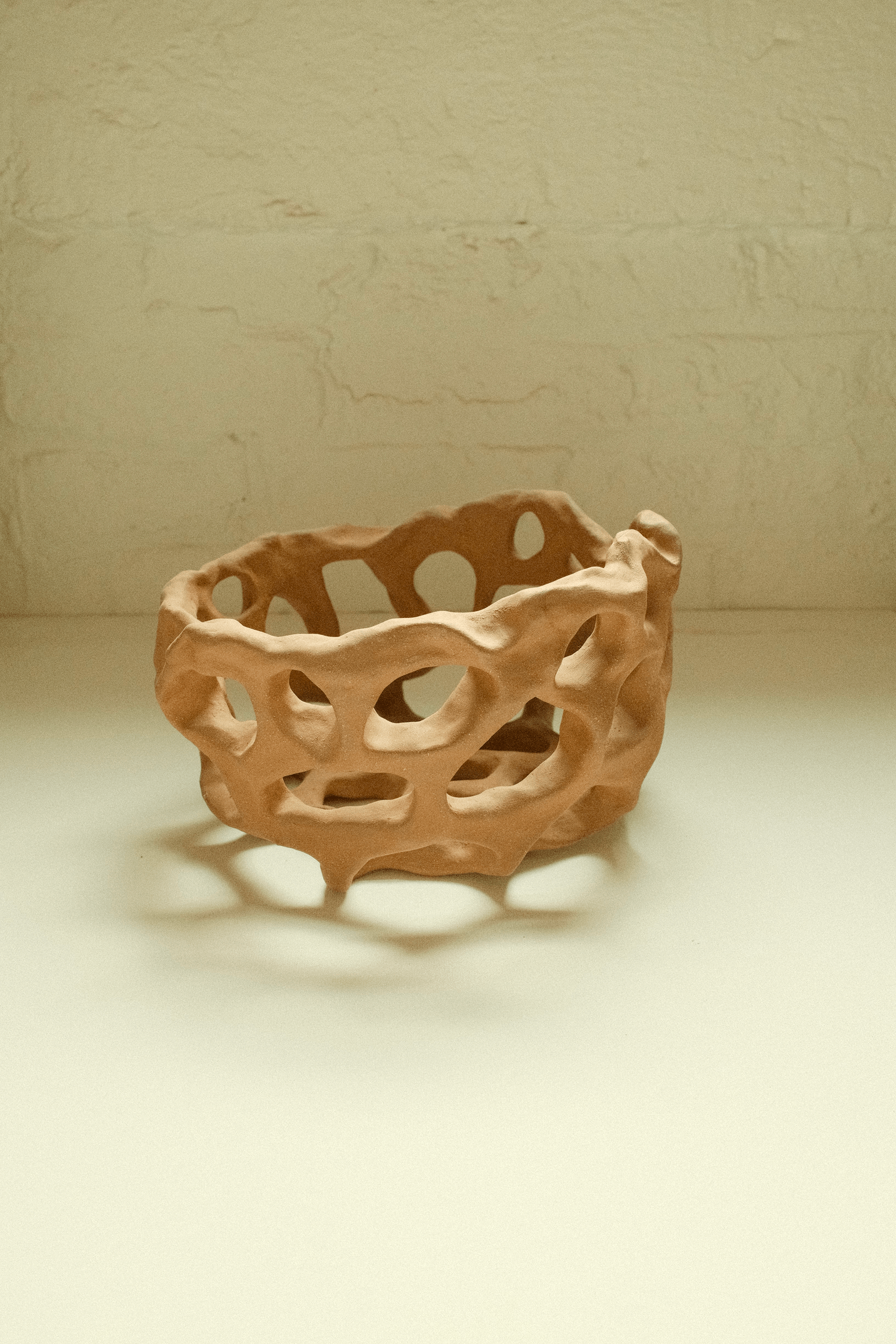
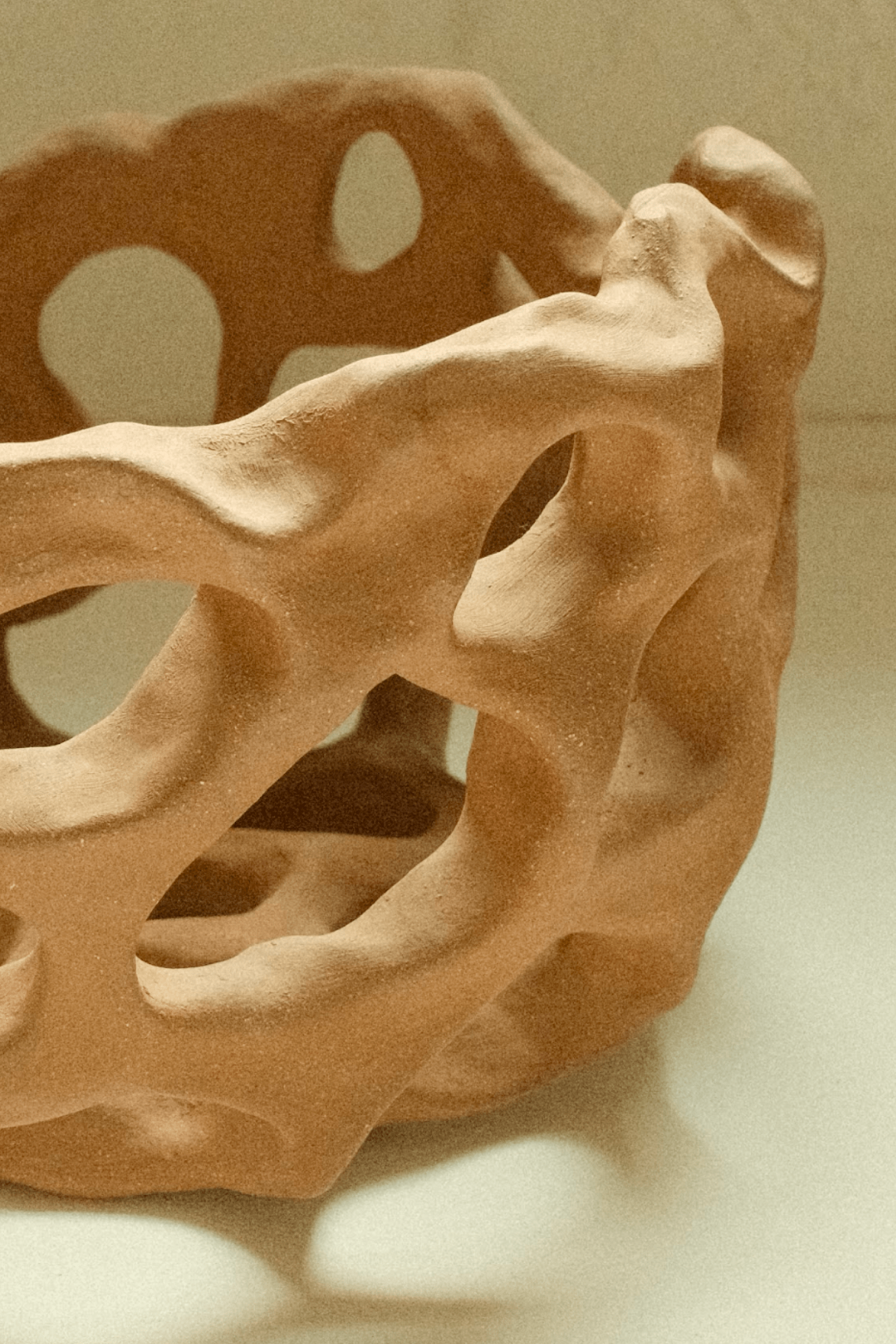
Hillary Henrici is a designer and ceramicist based in Massachusetts. Inspired by the contours found in the natural world, her work brings forth the forces at play between the certain rawness of clay as a material, and ethereal intricacy of the forms she pushes it to take. Her process combines slab building and carving techniques to showcase negative space in pieces that are as much sculptural as they are functional.
Q: Your work is deeply informed by natural contours, erosion, cavities, and organic rhythm, however somehow the results feel carefully constructed rather than purely intuitive. What initially draws you to these forms in nature, and how do you translate them into something deliberately built by hand?
H: I’m compelled by the entropic order inherent in the natural world, where land and stone serve as lithic records of random, discrete erosions. My process follows a similar geologic patience—beginning with structural intent, then allowing the material to guide the outcome as incidental variables emerge.I don’t view my hand as a force of absolute control, but rather as an environmental pressure coaxing the clay toward its final, bespoke state.
Q: You often work with negative space as an active element rather than a void. When developing a piece, how do you think about absence and structure simultaneously, and at what point does negative space become central to the work rather than supportive?
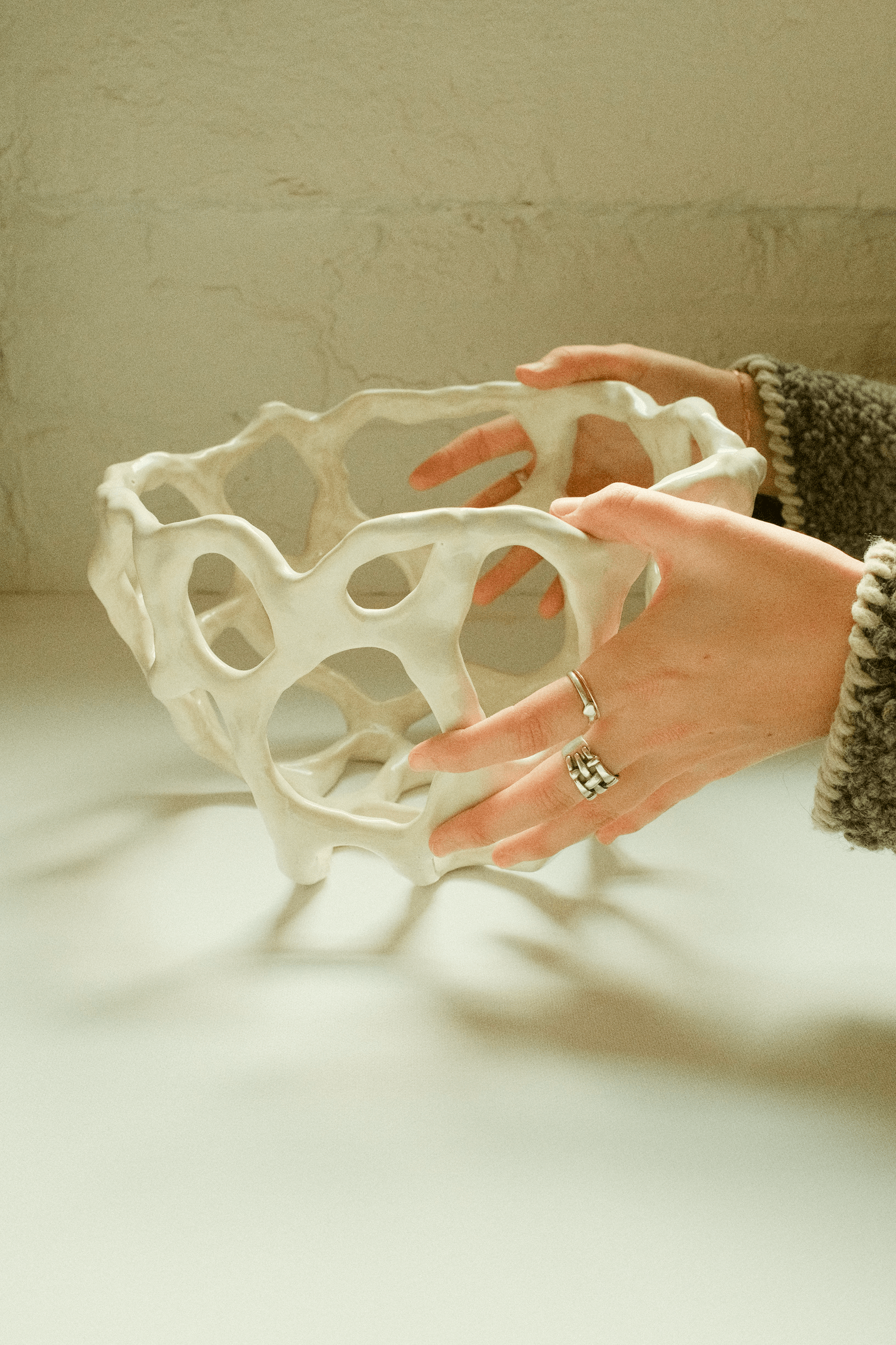
H: The absence is the creation. It emerges from my first perforation and continually transforms the material into an articulated work. Negative space becomes the indexical evidence of manipulation, and thus the structure is defined by what I have chosen to remove. Without that void, there is no proof of the hand, and the form is stagnant.
Q: Your process combines slab building with carving, allowing both control and risk to coexist. Can you talk about how these two approaches function together in your practice, and how much you allow the material to resist or redirect your original intention?
H: There is a beautiful dialectic inherent in making with clay. I intend for the material to redirect me and welcome gravity as a collaborator that introduces sinking and deformation which I must then negotiate. These effects are immediately graspable to the viewer and introduce a vulnerability to the work that I consider essential. They impart a layer of pathos and reality to the piece, tethering it to its literal, earthly state.
Q: Many of your pieces sit between sculpture and function. They feel architectural, yet intimate in scale. How do you decide when a form should remain primarily sculptural, and when it should invite use or interaction?
H: My forms often invite evocation, echoing either the calcified nature of bone, coral, and stone or the industrial patterning of nets and lattices. I think the spatial context they occupy should inform the interaction, as should the subjective connotations they trigger in the individual. The viewer’s personal relationship with the sight and feeling of the piece is what dictates form versus function.
Q: As a designer and ceramicist, you navigate multiple disciplines at once. How does design thinking shape your approach to form, structure, and usability, and where do you allow intuition or unpredictability to take over?
H: There is a constant productive friction between my design and art methodologies. A design mindset seeks to imbue the outcome with order, rigor, and structural integrity. Simultaneously, the artist's intuition facilitates unexpected, often transcendent discoveries. I rely on a refined sense of composition to navigate that tension and reconcile the balance between structural logic and visceral impulse.
Q: Looking forward, are there new scales, environments, or functional contexts you’re interested in exploring? How do you see your work evolving as you continue to investigate structure, space, and the physical limits of clay?
H: I’m eager to explore scale and produce a shift from the intimate to the immersive. I intend to push deeper into strictly sculptural realms, probing the physical limits of the medium while integrating interrelated natural materials such as fibers and paper. I hope to question the literal and metaphorical tension between hardness and fragility, and weave more explicit human narratives into each work.